One of the more nebulous parameters on a compressor is its knee. While it’s adjusted in decibels, this affects the shape of the curve, and compressor knees are generally described as a hard knee or a soft knee. Let’s compare the two, identify what they both are, and which you should favor in different situations.
Hard Knee Vs Soft Knee
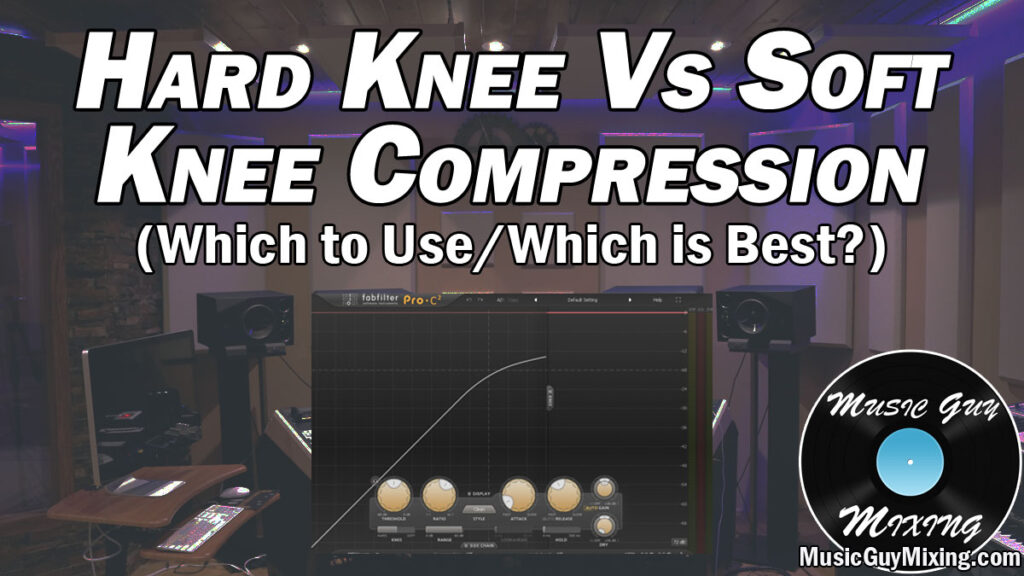
First, a quick refresher on what the compressor knee is.
Whenever you set up a compressor, a key component is the threshold. This determines what level the peaks of the audio you’re compressing must reach before compression will actually engage.
If you set the threshold to -10dB, normally the track you’re compressing must at least reach -10dB before that compression will engage at whatever settings you’ve dialed in.
Why did I say “normally”? Enter the compressor’s knee parameter.
The knee actually controls how strictly the threshold is enforced:
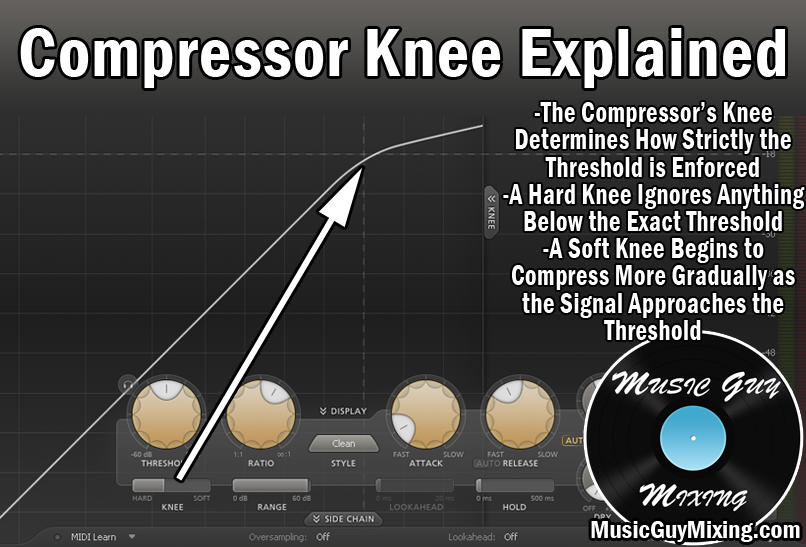
On the lower end, a hard knee (closer to or at 0 decibels) strictly enforces that threshold. In other words, with the hardest/lowest knee setting of 0dB, compression will ONLY begin once the peaks of the audio reach your threshold:
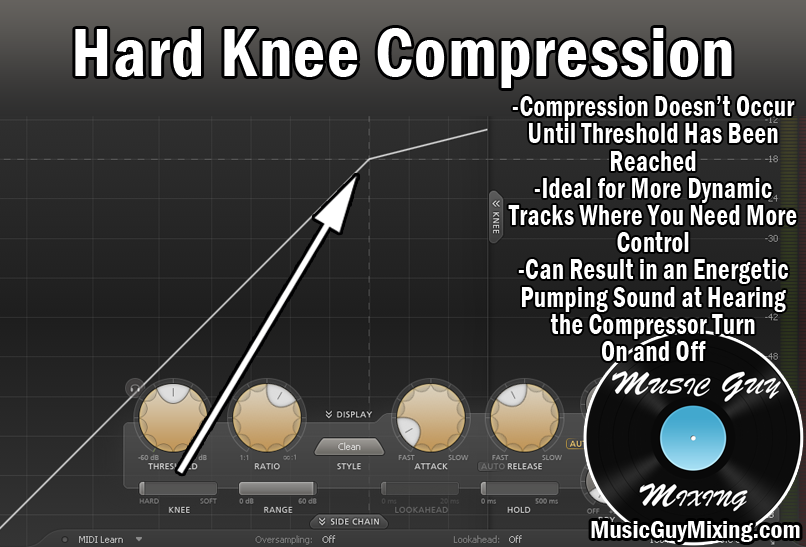
As you can see, a hard knee is represented by straight, uniform lines which is showing you’re compressing at that uniform rate once that threshold is met.
Harder knees are suitable in situations where you have simple dynamic patterns.
A good example of when to use a harder knee is when you have a snare or a kick drum you want to get a little more sustain from on the backend. The dynamics of those instruments are predictable and have an all-or-nothing kind of dynamic range. You don’t want to pull up anything else in the compression – you want to set the parameters to get the backend sustain you’re looking for and nothing else.
On the higher end, you have softer knees which are represented by more decibels and result in curvier lines:
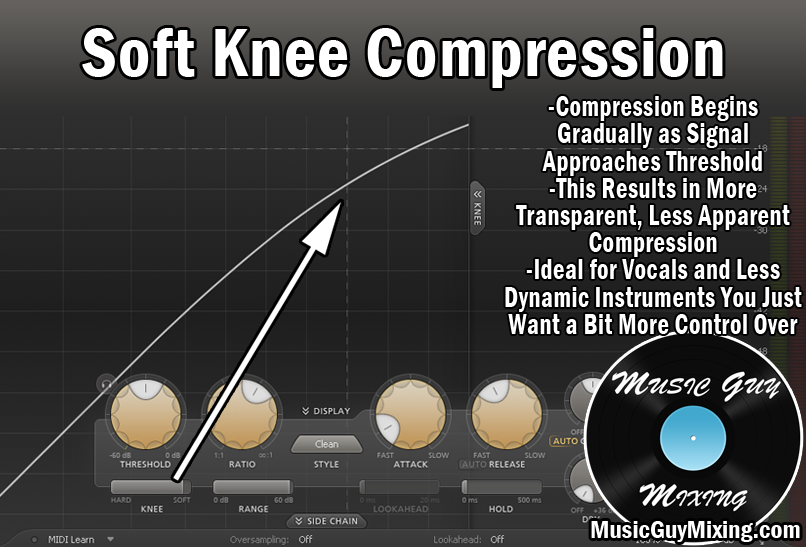
In this case, you’re beginning to compress as the level of the track’s peaks approach the threshold, albeit at a lower ratio than what you have set.
Even if the ratio is never met, you can still get compression with a softer knee, again at a lower ratio, resulting in gentler and more subtle compression.
A soft knee is ideal for tracks with more complex dynamics when you’re not looking for an all-or-nothing approach.
Vocals are a classic example of a type of track where you’d want a softer knee. You typically have complex dynamics with a vocal track as the literal level rises and falls with the energy level of the delivery.
A softer knee does a better job of smoothing everything out in the performance which is typically what you’re looking for without letting the listener hear the compressor at work.
Of course, the knee is just one of many important parameters on the compressor, so refer to my audio compressor settings chart overview for more information, and especially grab my free compression cheat sheet for the exact settings to dial into every type of instrument and audio in your next mix.